Eighteen lines in longhand
A tester put it to us without softening it: there is no point having a graphic inventory if I click on it and the only thing it does is make a noise.
He was right. You clicked an object, its sound played, the frame around the slot lit up, and that was that: the game waited for you to pick a verb from the grid. Except that someone clicking an object isn’t composing a command yet. They are asking what the thing in their hand is. Nobody answered that question, and the answer was already written for all nine objects, sitting in the code waiting for someone to press the right verb.
Now the click is a LOOK. The object stays selected as before, the verb pressed afterwards still applies to it, but the gesture has stopped being half a sentence.
The sheet
There is one object on this ship worth more than all the others put together. Until yesterday it was the worst treated of the lot.
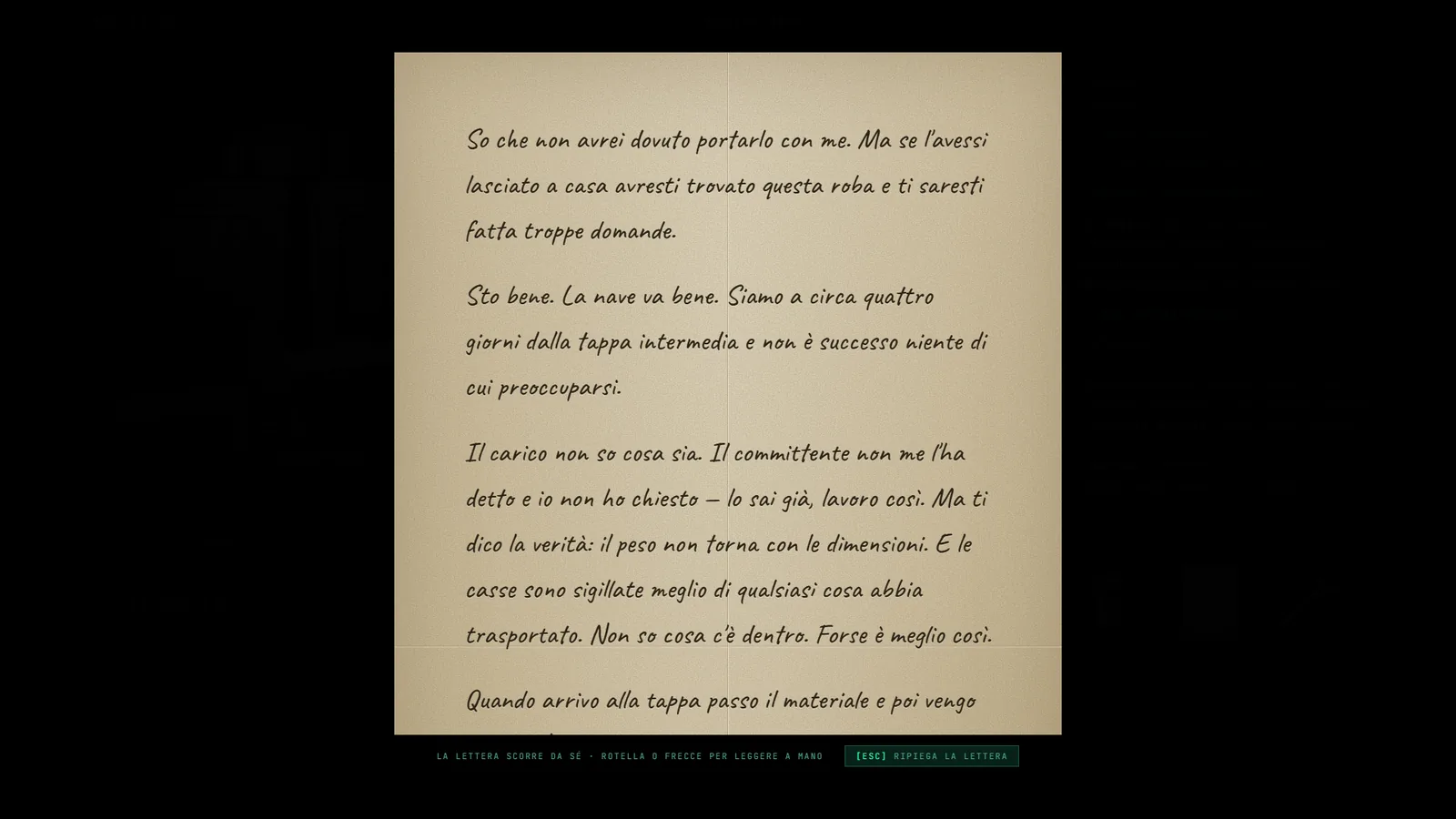
The letter was written by the man who owned the Santa Maria before William, and he never posted it. He kept it on him to hand over in person when he got back. Fifteen hundred characters, the only time that man speaks without somebody else reporting him.
It used to arrive as a wall of text in the narrative panel, in the same fixed-width type the ship uses for its system messages. Eighteen lines in longhand, even strokes, a constant slant: that is how William describes it when he looks at it. Then the game showed you those lines like a logbook entry.
Now it is a sheet. Pale paper going yellow at the edges, the vertical fold down the middle and the two horizontal ones that split the page into thirds, the grain you catch against the light, a slanted hand, and an unreadable signature at the bottom. The folds and the colour come from the object you see in the inventory: that one is the sheet folded in William’s hand, this is the same sheet opened out.
Not a word of it changed. All that changed is where you read it.
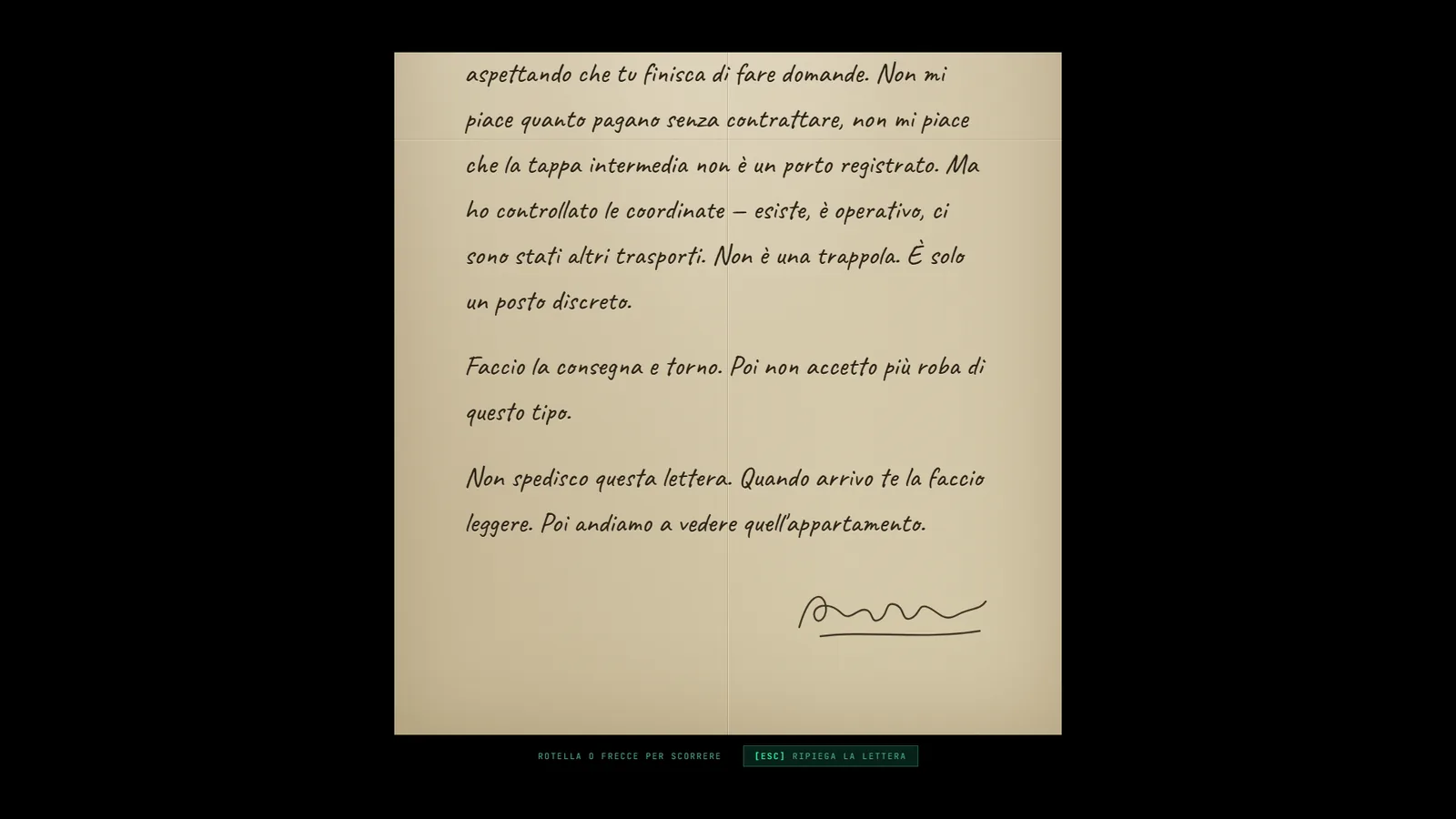
The sheet scrolls on its own, first line to last, at reading pace. Anyone who wants to go back over the third paragraph takes control with the wheel and the scrolling stops. What it deliberately does not do is appear one letter at a time like a typewriter: that letter was written eighty-odd years ago, the writing was over long before, and it is the reader who turns up late.
The paper isn’t a drawing. It is gradients, a patch of noise generated on the spot for the grain, three lines for the folds, two strokes for the signature. The reason is practical: the game’s text is still being revised, and a drawn sheet would have to be redone every time a word changes. This one adjusts by itself.
The voice that is not there
The sheet scrolls at reading pace because a voice is supposed to keep that pace, and that voice hasn’t been recorded yet. None of them have, in this game: the dubbing is the big thing still ahead of us.
Which makes the current speed provisional by definition. Once the recording exists, the audio will decide how long the scroll takes, instead of a number chosen at a desk. For now we settled on thirteen and a half characters a second, roughly the pace of someone reading aloud without hurrying, and that is exactly what we are asking the testers: too slow? Did you close the letter before the end?
Five slots were left over from when the game lasted twenty minutes
Manual save slots went from five to ten, inside a window twice as tall. There isn’t much to tell, and it is the change most likely to be felt: five were enough when there was half an hour of game.
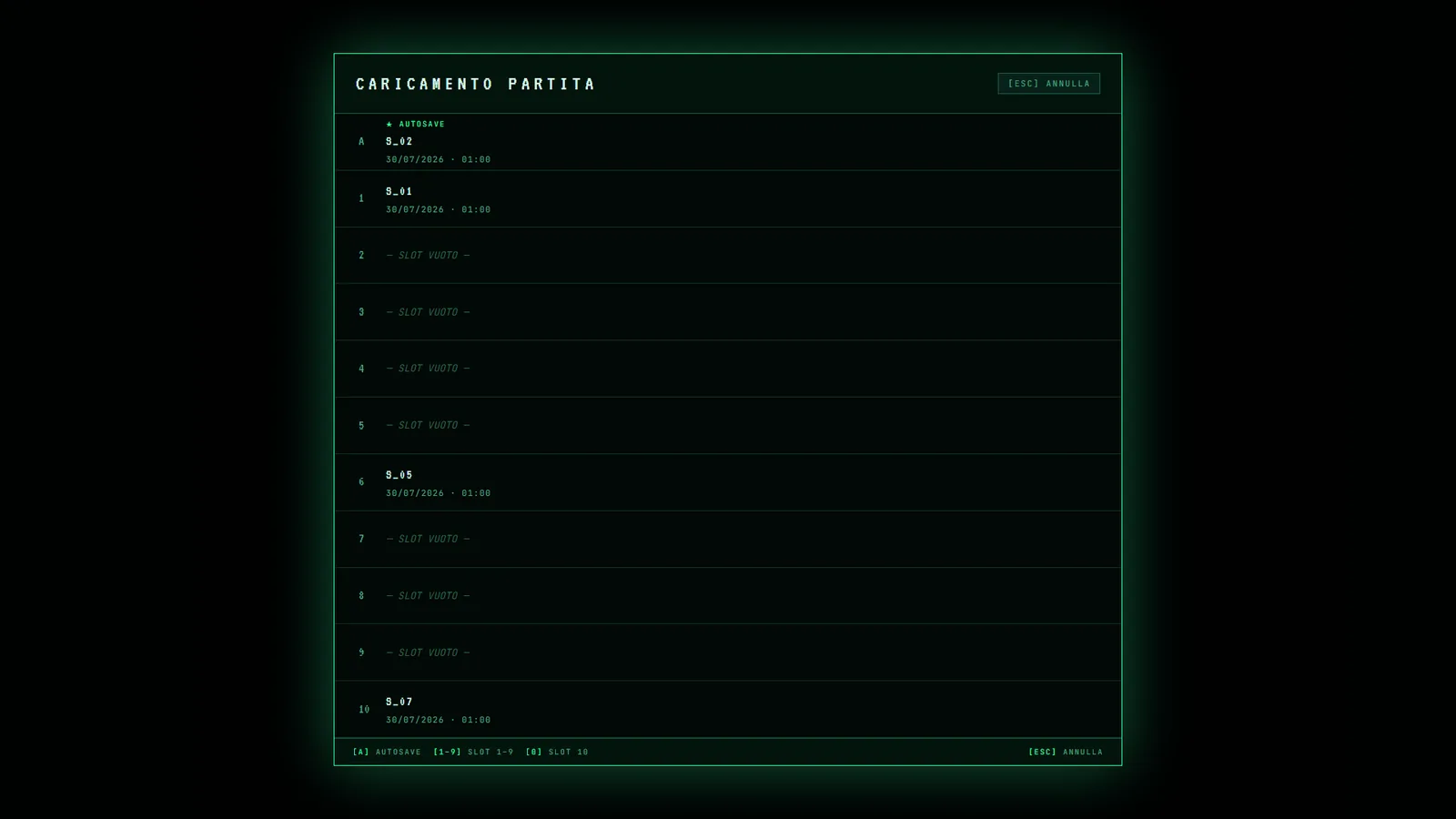
A note for anyone coming from the previous build: zero is now the tenth slot, and the autosave loads with A.
The page that dismissed itself
The seventh test build is about to go out, and from this version it opens on a page listing what has changed since the last time the testers had something to play. Between that build and this one there are fifty-eight versions: a line-by-line list would be a changelog, not a page, so there is a summary, and at the bottom the names of the people who reported what we fixed.
There is also a date. That copy stops working on 6 August: after that it opens on a screen saying so and goes no further. It is there to stop a July build from passing itself off as the game six months from now. Saves are left alone.
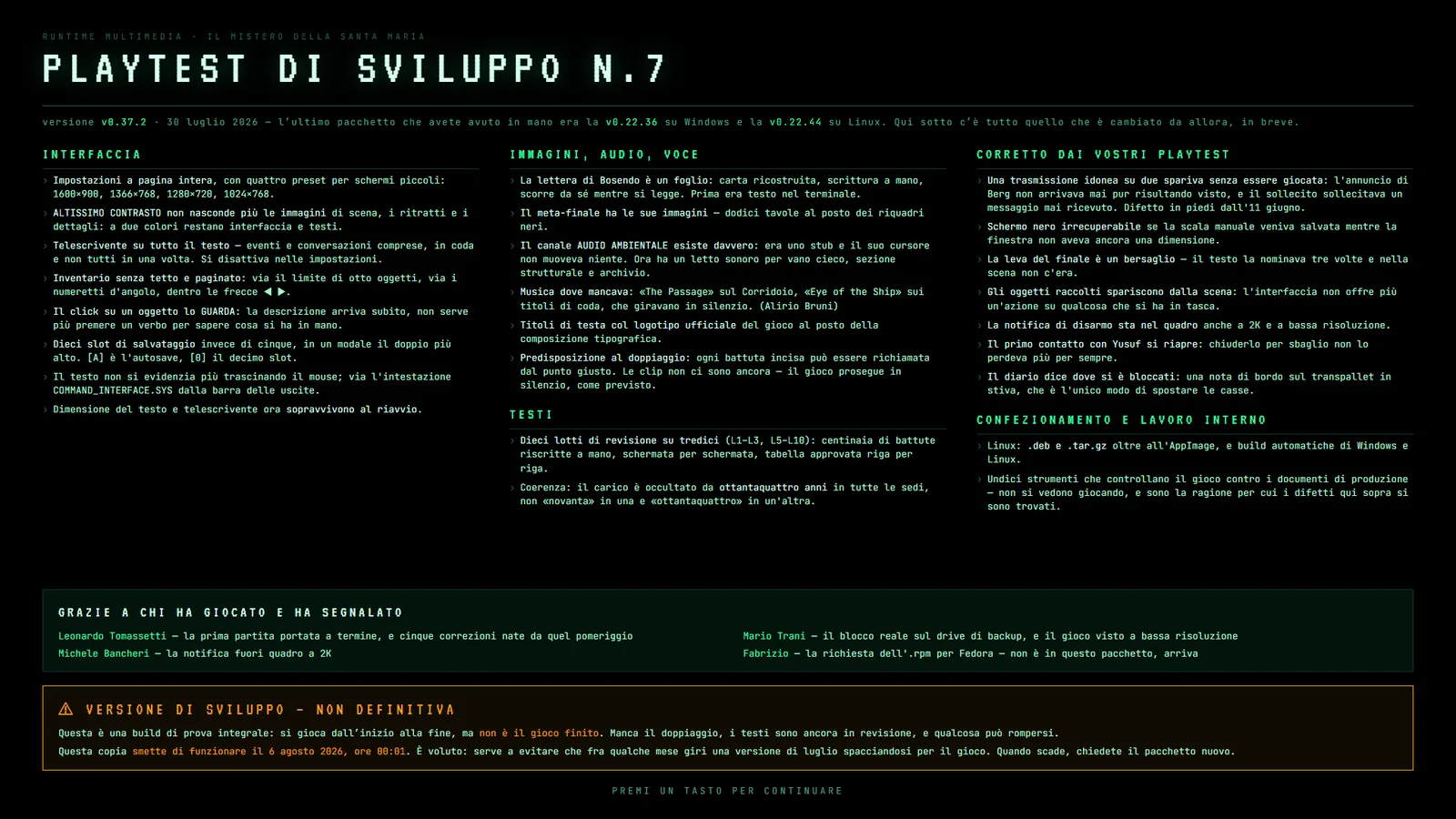
Then came the part worth telling. The Linux package had passed every check we have: the automated one on the code, the measurement making sure the page was not cut off, the expiry tested by moving the clock, the count of intro clips inside the sealed package, a real install on a Linux machine with the game starting up and printing no errors. All green.
At the end we looked at a frame from that startup, twenty-five seconds in. On screen was the menu cover art. The page we had just written, the one with the expiry date on it, wasn’t there: it had been passed, and nobody had touched anything.
The page waits for any key and has no timer, because a page that announces an expiry and then removes itself while you are reading it hasn’t announced anything. Only the desktop environment hands the window an event the moment it appears, and the game was taking that event for an answer. The same goes for two ways the game actually gets started: launching it from a terminal by pressing Enter, and double-clicking the icon. The second release lands on a window that has only just opened.
One and two tenths of a second of deafness at the start, and the problem is closed. The “press any key” prompt now appears only once pressing a key does something. The lesson stays written down here so we don’t have to learn it twice: none of those checks was looking at what the player sees. They were looking at whether the package was built properly, which is a different question.
Meanwhile
The build is ready and goes out in the next few days: installer and portable for
Windows, .deb, AppImage and archive for Linux. Of everything inside it, the one
thing we want to hear about is the letter. So far the only people who have read
it are the ones who assembled it, and that doesn’t count.