The voice said twelve
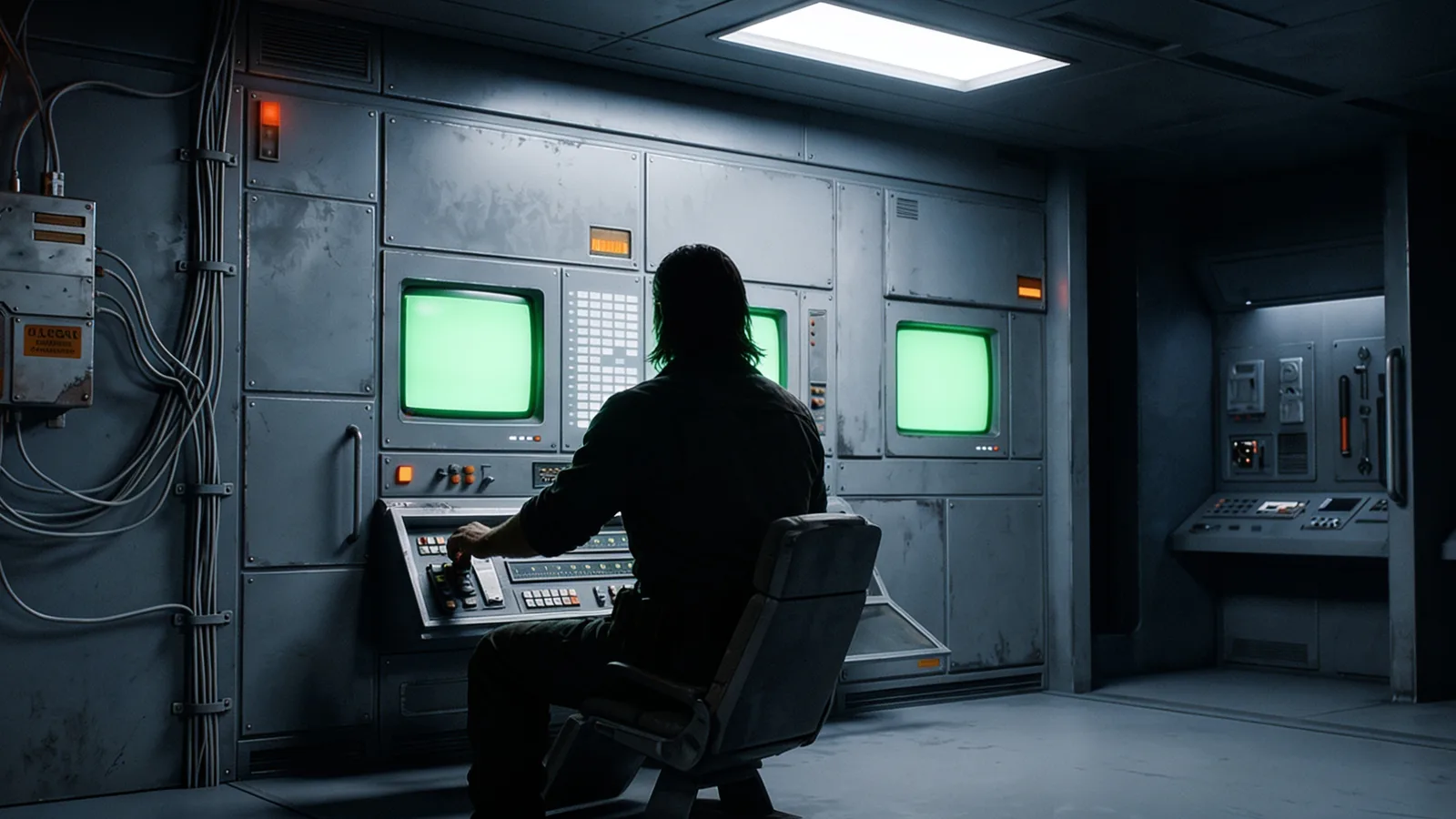
The game opens on nine shots of the ship with William’s voice over them. You see the Santa Maria a piece at a time while he talks about her, and at the end there is his face, with nothing on top of it.
We recorded and edited that voice last week. A second version turned up yesterday, and the edit was done again from scratch.
Six seconds of advertising
The file started with a jingle. The tag of the post-production service the audio had been cleaned with, the kind they ask for in exchange for the free tier.
Removing it takes a minute. What made us stop is where the transcription program thinks the speech begins: inside the tail of that jingle, a second early. Trust it, cut there, and the game opens with the last syllable of an advert.
We did not fall for it, because we do not ask that program where to cut. We ask a stupider tool, one that understands nothing of what it hears and can only say where there is sound and where there is none. The clever program is for the words. To know where they start you have to look at the silence.
Eleven times seventeen
In the first recording William says: twelve years I have been keeping the Santa Maria.
Then you start playing, and in eleven different places he says it has been seventeen. At the log terminal. Three times along the corridor. Twice in the cabin, twice in the engine room, then at the structural section, the archive, the airlock. He has slept in that bunk for seventeen years. That pressure gauge has not got a reading wrong in seventeen years.
So the game opened by contradicting eleven lines the player would read later, and it stayed that way for four days. The line itself is fine, it sounds right, and you do not go back to check a number you wrote yourself.
The new recording says seventeen. Nobody had asked for it because of that.
The count of the ship’s structures changes too, from sixty-one bulkheads to thirty-eight compartments. Nothing breaks there: that number appears nowhere else, and “compartments” is the word the inspection uses when it writes to William. And the monologue now closes earlier. It used to end on “it is the only one I have”, and now it stops on “this is home”.
Where each line goes
The speech does not run under the pictures. It is cut into nine pieces, one per shot, and each one starts a second after the cut.
Where the text names something you can see, the line goes there. Rust eating through the plating over the rusted hull. The joint that gives way over the engines. “There is nobody else who knows where to put their hands” while he is unbolting something. “I have opened them all more than once, with the list in my hand” with his hands on the connector.
One shot is black. It had been left free for a titles card, and now it holds the most closed-off line in the monologue, the one where he says that out here, waiting only means finding it worse later. There is nothing to look at on black, and that line does not need any help.
The new text settled in better than the old one. The sentences are shorter and there are a few more of them: they fit inside the shots without having to be broken up to get there.
The close-up stays silent
The last shot is the only one with no voice over it, and that is a request from Simone that does not get touched.
Eight seconds looking at a man who has just finished saying that this ship is his home, while they take it apart around him. Nothing on top. Then the transmission signal comes in and the game starts.
The price is that the arithmetic has to be done again every time the track is re-edited: the speech has to close before that, with room to spare. The last word now falls almost five seconds before his face appears, two more than it did with the previous track.
What is missing
We have not listened to it.
Measuring the levels is a different thing. We know the voice sits above the music with the same margin as before, because we deliberately set the new track’s volume where the old one’s was. Whether the speech covers the music, or gets lost in it on headphones, is something an ear decides, and the audio side is Simone’s at the moment.
The test on the real package with a cleared cache is missing too, which is the condition of someone opening the game for the first time. Last week that exact test turned up a fault the development version could not show: the first shot ran three seconds long because the machine was still opening the nine videos, and the line about rust started before the hull appeared. The fix is in and it has stayed in, but the test has to be run again anyway. That falls to the full playthrough we are doing these days, before the build.